
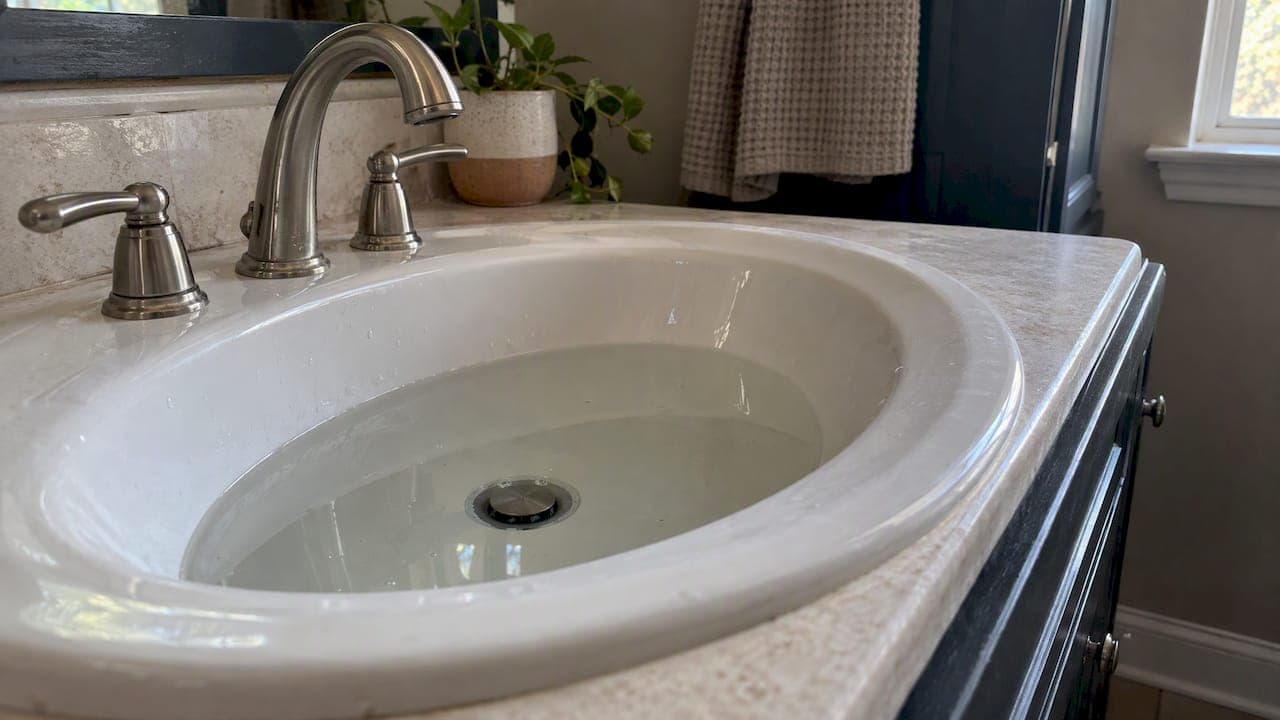
A clogged drain is usually fixed one of two ways: a plunger or hand snake clears a clog in a single fixture, or a professional clears a deeper blockage in the branch line or main line. Simple clogs typically run $150 to $350 to repair, and the price climbs when the clog sits farther down the pipes. This guide shows you how to tell which kind of clog you have, what to do first, what to avoid, and when a repair call saves you money instead of costing it.
TL;DR
- One slow fixture usually means a local clog in the trap or branch line. Several slow fixtures at once point to the main line.
- A plunger or drain snake is the safe first move. Chemical drain cleaners can corrode pipes, and they must never be mixed with other products.
- Typical U.S. costs: $150 to $350 for a simple clog, $350 to $770 for hydro-jetting.
- Sewage backing up, gurgling toilets and repeated clogs are signs to call a plumbing pro, not to keep plunging.
- In Newnan, GA, we handle plumbing repairs for homeowners, landlords and property managers.
Table of Contents
- Start by finding where the clog is
- Clearing a simple clog safely
- What to avoid when a drain is clogged
- What clogged drain repair costs
- When a clogged drain needs a professional
- Perspective: why we treat a clog as a diagnosis first
- Preventing the next clog
- How to prepare for a drain repair visit
- Get drain repair from Newnan Handyman
- FAQ
- Sources
Start by finding where the clog is
Before you pick a method, work out how far the problem reaches. The location of the clog decides almost everything else: the tool, the cost and who should do the work.
One fixture is slow or stopped. A bathroom sink that drains slowly while the shower and toilet run fine points to a clog in that sink's trap (the curved pipe under it) or in the short branch line behind it. This is the most common and the easiest kind to clear. A clog affecting a single fixture is typically a local issue, and the usual tools reach it.
Several fixtures are slow at the same time. If the tub, the bathroom sink and the washing machine drain all sluggishly, the blockage is likely downstream of all of them, in the main drain line. Plunging one sink will not fix that, because the water has nowhere to go.

Odd symptoms elsewhere. A toilet that gurgles when you run a sink, water that rises in a tub when the washer drains, or sewage showing up in a floor drain are all classic main-line or sewer-line signs. Treat these as professional work.
A quick test: run water in the fixture nearest the lowest point of your house, such as a basement or ground-floor shower. If it backs up when you flush an upstairs toilet, the main line is the suspect.
Clearing a simple clog safely
If the problem is one fixture, start with the least aggressive tools. A plunger or drain snake is an inexpensive option for simple clogs, and neither one risks your pipes the way harsh chemicals can.
Remove what you can see
Pull off the stopper or strainer and take out hair, soap scum and debris by hand. Wear gloves. In a bathroom sink or tub, a hair clump sitting just under the stopper is the cause more often than you would expect. A flashlight helps.
Plunge correctly
- Use a cup plunger on sinks and tubs (the flat-bottomed kind) and a flange plunger on toilets.
- Block the overflow opening with a wet rag so pressure goes into the clog, not out the overflow.
- Add enough water to cover the plunger cup.
- Seat the plunger flat over the drain and push and pull with steady, firm strokes for 15 to 20 seconds.
- Pull the plunger off the drain and see if the water runs. Repeat a few times before moving on.
In a double kitchen sink, plug the second drain so pressure is not lost.
Use a hand auger for clogs past the trap
A small hand auger (often called a drain snake) can reach clogs past the trap in the branch line. Feed the cable into the drain until you feel resistance, crank the handle to hook or break up the clog, then pull it back slowly. Expect a mess: whatever the snake catches will come back out with it. Flush with warm water afterward and watch how fast it drains.
If the snake does not get you through after a couple of tries, or the cable stops against something it cannot move, that is a good point to hand the job to a plumbing pro. Forcing the cable can scratch or damage older pipes.
Clean the trap
If you are comfortable with it, placing a bucket under the sink and unscrewing the slip nuts on the trap lets you clear it directly. Reassemble with the washers seated correctly and run water to check for drips. A leak at the joint afterward is a sign the connection needs a proper repair.
What to avoid when a drain is clogged
The wrong shortcut can turn a $150 clog into a bigger repair.
Chemical drain cleaners. They are tempting, but they can corrode pipes and cause leaks and other damage. They also leave standing water full of caustic chemicals that a plumber then has to work around, which is a safety issue for whoever handles the next step. If you do use one, follow the label exactly, and never mix drain cleaners or combine them with other chemicals such as bleach. Tell your plumber if you have already poured one in.
Boiling water as a cure-all. Hot water can help soften a grease film in a kitchen drain, but a full kettle of boiling water is not a good idea on every drain. Very hot water can stress plastic pipes and loosen joints, and it can crack a porcelain sink or toilet bowl. If you want to try heat, hot water from the tap is the gentler choice. It will not clear a compacted hair or soap clog, so do not rely on it for one.
Baking soda and vinegar as a rescue. The fizz can freshen a drain, but it rarely moves a real obstruction. If the water has not moved after one attempt, switch to a plunger or snake instead of repeating it.
Pouring grease down the sink. Cooking fat cools and hardens inside pipes. Wipe pans into the trash instead.
Flushing the wrong things. Wipes labeled "flushable," paper towels, feminine products and cotton swabs are frequent causes of toilet and main-line clogs.

What clogged drain repair costs
Prices depend on where the clog is, how it is cleared and how hard the access is. These are national figures, not what we charge, so treat them as a way to judge a quote.
| Type of drain work | Typical U.S. cost | When it applies |
|---|---|---|
| Simple clog in a sink, tub or toilet | $150 to $350 | One fixture, clog within reach of a snake |
| Hydro-jetting | $350 to $770 | Clogs farther down the pipes or particularly stubborn ones |
Main-line work is a bigger category and the range is wide, because it can involve a long run of pipe and, in some cases, a camera inspection to see what is going on. A clear written scope before work starts is the best protection against surprises, whoever you hire.
A few things push the price up: a clog that returns after clearing, a cleanout that is buried or missing, roots or a collapsed section in older lines, and work done outside normal hours. A few things keep it down: acting early, knowing which fixtures are affected, and clearing the area under the sink or around the cleanout before the visit.
When a clogged drain needs a professional
There is a point where more plunging is the expensive choice. Call for repair when you see any of these:
- Multiple fixtures slow or backing up together. This points to the main line.
- Gurgling from toilets or drains when you run water elsewhere in the house.
- Sewage in a floor drain, tub or shower.
- The same drain clogging again within weeks. A repeat clog often means a partial blockage, a damaged section or a pipe with a belly where debris settles.
- A snake that cannot get through or keeps hitting the same wall of resistance.
- Slow drains in an older home with cast iron or clay lines, where the pipe interior may be rough or cracked.
- Wet spots, a musty smell or stained drywall near a drain line, which suggest a leak and not only a clog.
Leaving a main-line problem alone usually makes it worse. Catching the signs early can keep a routine cleaning from growing into a major sewer repair.
If sewage backs up
Stay out of it. The U.S. EPA advises that sewage backing up into a home carries potentially harmful pathogens, so avoid contact and call your local health department or regulatory agency. Keep children and pets away, do not run more water down the drains, and call a plumber. Wear waterproof gloves and boots if you must be near it, and wash thoroughly afterward.
If you have a septic system
Many properties around Newnan and the surrounding area are on septic rather than city sewer, so check which you have. The EPA lists the signs of a septic malfunction as backups in drains or toilets, strong odors near the system, and spongy or bright green grass over the drainfield. If your drains back up and you see any of those outside, the problem may be the septic system, not a clog in the house, and the fix is different.
Perspective: why we treat a clog as a diagnosis first
Most people call us after they have already tried the plunger, a bottle of drain cleaner and a long weekend of frustration. What we do first is slow down and figure out where the water is actually stuck. A clog in one trap, a partial blockage in the branch line and a problem in the main line look alike from the sink, and they are fixed very differently.
That is why we put so much weight on clear communication. Before we start, we tell you what we think is going on, what the job involves and when we can do it. Once we are in the work, if we find something that changes the scope, such as a damaged section of pipe or a fixture connection that is failing, we explain it before moving ahead, so there are no surprises.
Drain trouble also rarely stays inside the pipe. A slow leak under a sink can damage the cabinet floor, drywall and flooring. Because we also do drywall, painting, flooring and carpentry, we can handle the repair behind the repair. For landlords and property managers, that means one call for the clog and the damage it left behind.
Richard
Preventing the next clog
Most clogs are slow builds, so a few habits help a lot, whether you own the home or manage ten units.
Kitchen
- Scrape plates into the trash and wipe grease from pans with a paper towel.
- Use a sink strainer and empty it daily.
- Run hot tap water for a short time after washing greasy dishes.
- Keep fibrous waste (celery, potato peels, coffee grounds, eggshells) out of the disposal.
Bathroom
- Fit a hair catcher in the shower and tub drain, and clean it weekly.
- Keep wipes, cotton products and dental floss out of the toilet.
- Rinse sink basins after shaving or brushing so debris does not settle in the trap.
Whole house
- Know where your main cleanout is and keep it accessible.
- Watch for trees and large shrubs near the sewer line, since roots seek out moisture in pipes.
- Pay attention to small changes: a sink that now takes a few seconds longer to drain is the cheapest time to act.
For landlords and property managers
- Give tenants a one-page note on what not to flush or pour down drains.
- Add drain checks to your turnover list, along with a test of each fixture under running water.
- Log which units and fixtures repeat. A pattern points to a shared line, and that is worth a proper look instead of repeated clearing.
How to prepare for a drain repair visit
A little preparation saves time and often money.
- Note which fixtures are affected and how long the problem has lasted.
- Write down what you already tried, including any chemical product you poured in.
- Clear the space under the sink and around the toilet so the work area is open.
- Find the cleanout, if you know where it is.
- Take a photo or short video of the symptom, such as water rising or a gurgle.
- Ask for the scope and timing up front, and ask what happens if the cause turns out to be something other than a simple clog.
Those details let a plumber narrow the cause faster, and they make the quote more accurate.
Get drain repair from Newnan Handyman
If your drain is not clearing, or it keeps coming back, we can look at it. Our plumbing repairs in Newnan, GA cover the day-to-day problems homeowners, landlords and property managers run into, and we explain the scope and the schedule before we start.

If a clog has left damage behind, we also take care of the follow-up work: drywall and painting and flooring. Send us a quote request through our site with a short description of what is happening and which fixtures are affected.
FAQ
How much does it cost to unclog a drain?
For a simple clog in a single fixture, the typical U.S. range is $150 to $350. Clogs deeper in the pipes may need hydro-jetting, which typically costs $350 to $770. Ask for a written scope before work begins so you know what the price covers.
How do you fix a really bad clogged drain?
Start by finding out how many fixtures are affected. If it is one, a plunger or hand snake is the first step. If several drains are slow, gurgling or backing up, the blockage is probably in the main line, and that calls for professional equipment and a proper diagnosis.
Does boiling water unclog a drain?
It can loosen a thin film of grease, but it will not clear a mass of hair or soap scum. Very hot water can also put stress on plastic pipes and joints and crack porcelain. A plunger or snake is the better first tool, and hot tap water is gentler than boiling.
Is it safe to use chemical drain cleaners?
Only with care. These products can corrode pipes and cause leaks, and you should never mix them with each other or with bleach. A plunger or snake avoids the risk, and if you have already used a chemical product, tell whoever works on the drain next.
When should I call someone for a blocked drain?
Call when more than one fixture is affected, when toilets gurgle, when sewage appears in a floor drain, or when the same clog returns within weeks. These are signs of a main-line problem or damaged pipe, not a one-off blockage.
Sources
- Cost to Repair a Clogged Drain (2026), ConsumerAffairs
- How to Choose and Use a Drain Cleaner, Consumer Reports
- Resolving Septic System Malfunctions, US EPA
- Drain Repair Guide: Clear Any Clog, PlumbingByTheBook
Written with BabyLoveGrowth to grow search and AI visibility